
The Crisis
The Problem
Mental Health Crisis – Nationwide and Growing
- In 2023 more than 49,000 Americans died by suicide. That’s roughly one life lost every 11 minutes
- An estimated 12.8 million Americans seriously considered suicide. 3.7 million made a suicide plan, and 1.5 million attempted suicide
- Suicide remains among the top causes of death for working age adults in the USA.
While these numbers are staggering, certain professions carry disproportionally high risk of suicide due to their environments of stress, trauma, exposure, long hours, isolation, and structural barriers to asking for help.
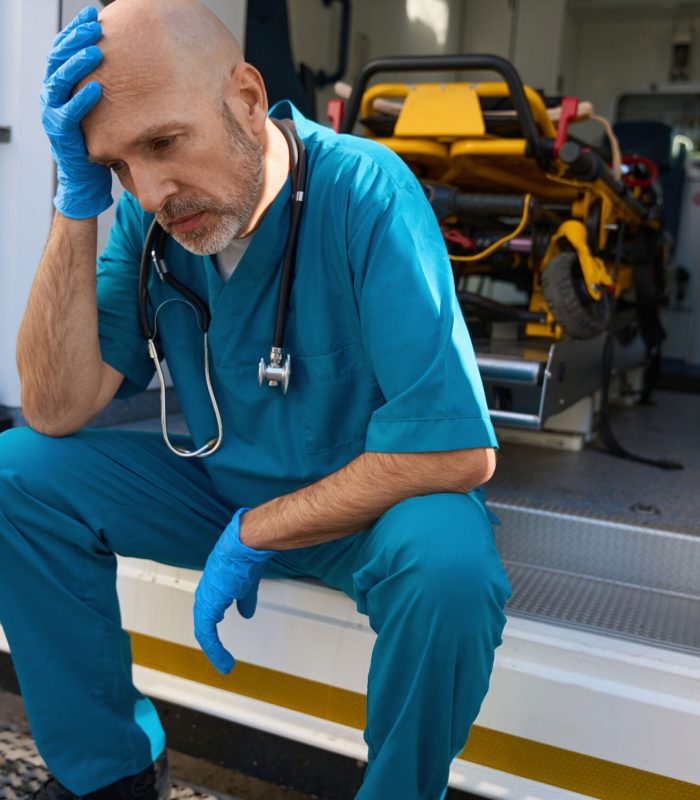

High risk Teams: Disproportionate Burden
- In 2021, workers in construction (and extraction-related fields) had among the highest suicide rates of any industry.
- In 2021 data, though construction workers made up only ~7.4% of the workforce, they accounted for nearly 18% of suicides in deaths with a known industry, meaning they’re far overrepresented in suicide statistics.
- In male-dominated and stigma-heavy fields, mental distress often remains invisible, unspoken, and untreated.
- Multiple studies show that first responders have an elevated suicide risk compared to the general population
- Repeated trauma, shift work, exposure to death and crisis, plus cultural expectations of toughness all build up silently with no safe reporting channel
- Recent large-scale research found that registered nurses, health technicians, and health care support workers had significantly higher suicide risk compared with non–health-care workers.
- A large meta-analysis of studies of trainees found that≈ 28.8% of resident physicians report depression or depressive symptoms during training (range across studies roughly 20.9%–43.2%)
- Patterns of suicide among residents are concerningly clustered around major stress-points in training: many suicides occurred during thefirst academic quarter of residency and again during the final quarter of the second year, suggesting transition periods are particularly high risk.
The Silent Problem - People Are Afraid to Speak Up
- In many high-risk professions, cultural pressure to be “tough,” stoic, or self-reliant discourages actual reporting of mental health concerns.
- People fear career consequences, stigma, judgement, or being labeled “weak.”
- Even when individuals notice red flags, in themselves or teammates, there’s often no trusted, anonymous place to voice concerns.
That’s why so many warning signs go unspoken, and get worse behind closed doors.
By the time an event triggers visible harm (burnout, breakdown, accident, suicide, resignation), it’s often too late.

What Must Change: A Unified Early-Warning System
What’s needed isn’t just more therapy or more hospital beds. It’s a proactive, structured, anonymous way to detect early warning signs, before they evolve into crisis.
Organizations need:
- A way for individuals to report concerns safely and anonymously
- A system that aggregates isolated signals into meaningful patterns
- Ability to detect risk early (before burnout, breakdown, tragedy)
- Leadership visibility, without violating trust or privacy
- Anonymity + actionability, so people feel safe to speak up and leadership can truly respond
That’s exactly why Univoxa exists.